What Your Siding Needs to Do Before the First Rainstorm Arrives
New siding can dramatically change a home’s appearance, but its long-term performance depends on much more than the visible cladding. The wall behind it has to manage rainwater, air movement, drying, and material transitions as a single, integrated system. For homeowners considering professional siding installation in Kirkland WA, understanding the relationship between the wall assembly and drainage plane can make a major difference in durability.
In the Pacific Northwest, exterior walls routinely face wet seasonal conditions. A well-designed wall assembly provides a controlled path for incidental moisture to drain away rather than allowing it to collect behind the siding. That approach can help protect sheathing, framing, insulation, and interior finishes while supporting the long-term performance of new siding.
Why the Wall Behind New Siding Matters So Much
Siding is often viewed as the home’s outer protective skin, but it isn’t intended to carry the entire moisture-management burden. Wind-driven rain can enter through small joints, seams, penetrations, and other openings in almost any cladding system. The wall assembly therefore needs another layer behind the siding to manage water that gets past the exterior.
This distinction is particularly relevant around Kirkland, where homes may experience different exposure conditions depending on their location and surrounding landscape. A property near Lake Washington can have different wind and moisture exposure from a home farther inland. In contrast, homes around Finn Hill or Totem Lake may have different combinations of trees, slopes, roof forms, and neighboring structures.
The point isn’t that every home needs an identical wall system. The important consideration is whether the chosen assembly provides a reliable way for incidental moisture to escape.
What Happens When the Drainage Plane is Interrupted?
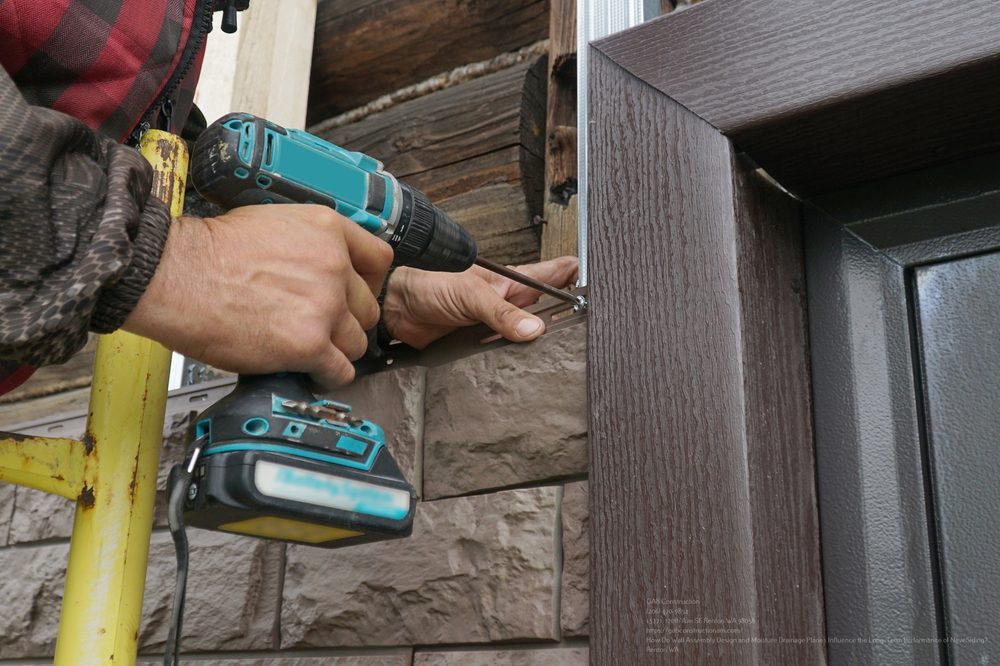
A drainage plane doesn’t have to fail dramatically to create a problem. A small unsealed penetration, an incorrectly layered flashing detail, a damaged weather barrier, or a poorly handled transition can provide an entry point for water. Once moisture enters the assembly, gravity, capillary action, and pressure differences can influence its path.
That makes moisture damage difficult to diagnose from the exterior alone. A stain below a window, for example, doesn’t necessarily mean the window itself is leaking. Water can enter higher up on the wall and travel along a concealed surface before appearing elsewhere.
The same issue can occur around roof intersections, decks, vents, and other penetrations. Building Science Education notes that water-managed walls rely on drainage planes because exterior cladding systems can allow some water penetration through joints and gaps.
For homeowners, this creates an important distinction between surface appearance and wall performance. A new coat of paint or a replacement siding panel may improve what’s visible, but it won’t necessarily correct a moisture-management problem hidden behind the cladding.
Do You Want Professional Siding Installation?
Contact GAB Construction Today For professional Exterior Solutions.
How Does Siding Installation in Kirkland WA Create a Reliable Drainage Path?
A drainage plane works best when its components connect continuously rather than functioning as isolated pieces. House wrap, flashing, siding, window details, roof intersections, and penetrations all need to work together. If one transition interrupts the drainage path, water can find an unexpected route into the wall.
Windows are a particularly important example. A window opening cuts through the wall’s drainage plane, so flashing must be arranged to direct water outward rather than into the framing.
Roof-to-wall intersections deserve similar attention. Roofing systems shed large amounts of water, and poorly coordinated transitions can concentrate that water against siding. Properly planned flashing, roof edges, overhangs, and drainage details help keep runoff moving away from vulnerable wall areas.
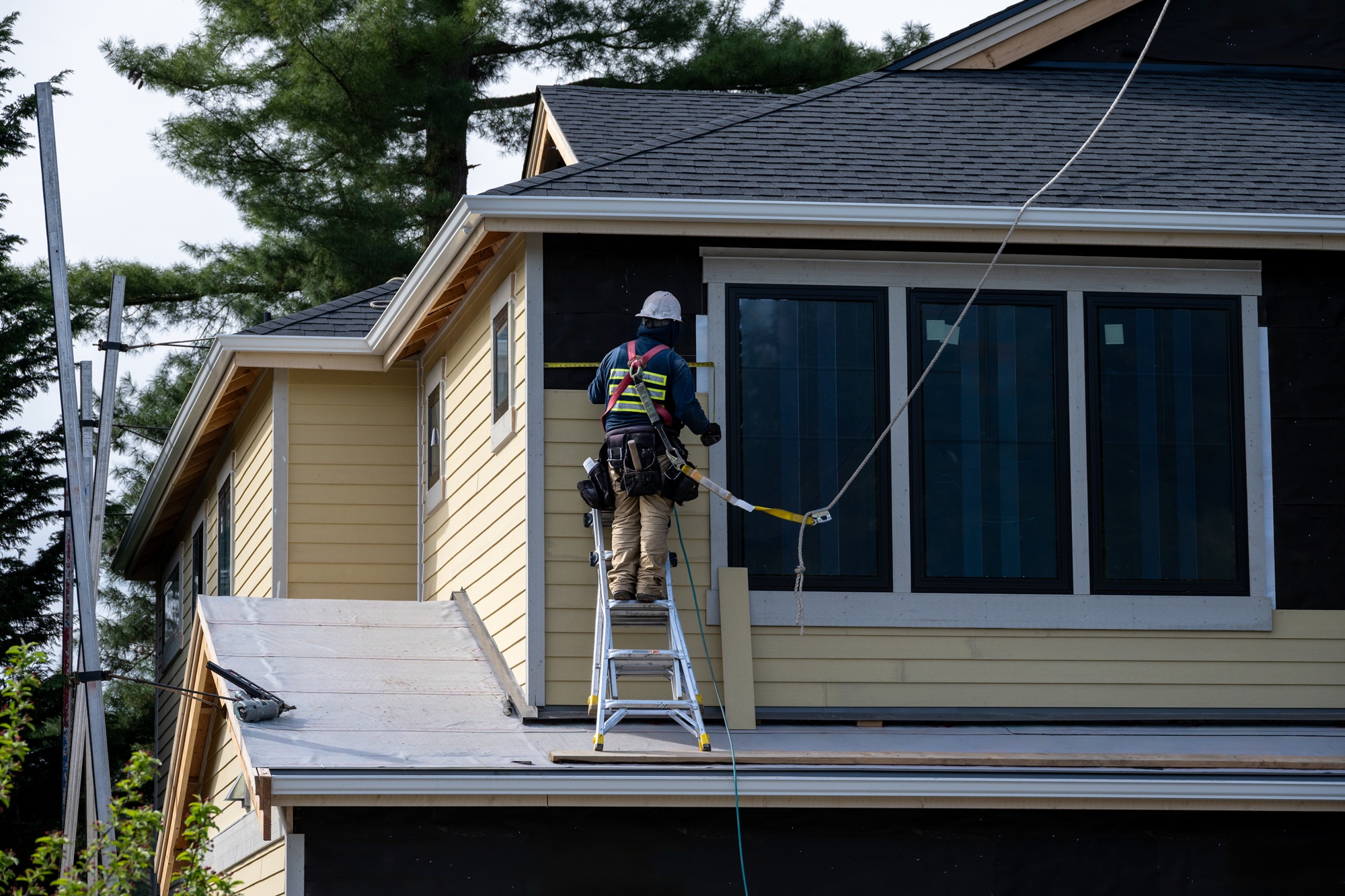
For siding installation in Kirkland WA, this means the installation process should begin with an understanding of the existing wall rather than treating the siding panels as the entire project. The visible material may be fiber-cement siding, wood, or other cladding, but its performance depends heavily on what lies behind it.
How Does Material Selection Affect the Wall Assembly?
The siding material itself influences how the exterior is detailed. Fiber cement siding can be a durable option, but its performance still depends on proper installation and a suitable wall assembly. The same principle applies to other materials. Wood siding has different moisture and maintenance considerations, while vinyl siding has its own requirements for movement and attachment.
Homeowners shouldn’t assume that a premium cladding product automatically creates a premium wall assembly. A high-quality product installed over poorly coordinated flashing or an interrupted weather barrier can still leave the structure vulnerable to moisture.
This is also where the term workmanship warranty deserves careful attention. A warranty may cover specific workmanship issues, but homeowners should understand exactly what it covers, how long it lasts, and whether it addresses the underlying wall assembly or only the installation of the visible siding.
Why Climate and Exposure Should Influence Siding Design
Kirkland’s position in King County means local weather conditions deserve consideration when planning an exterior wall. The Pacific Northwest is known for wet winters and extended periods when exterior materials may remain damp. Annual rainfall is only one part of the picture because exposure, wind-driven rain, roof geometry, drainage, and the home’s ability to dry also influence moisture performance.
That broader view matters for homes in neighborhoods such as Finn Hill and Totem Lake. Two properties in the same general area can experience different conditions due to their orientations, landscaping, roof configurations, and surrounding buildings.
A thoughtful siding project therefore considers the building as a system. The objective isn’t simply to keep every drop of water from touching the exterior. Some incidental moisture should be expected. The better strategy is to provide it with a predictable path out while allowing the assembly to dry.
What Should Homeowners Ask Before Approving a New Siding Project?
Homeowners don’t need to become building-science specialists to ask useful questions. A few practical questions can reveal whether a contractor is thinking about the wall as a complete assembly.
First, homeowners can ask which weather-resistive barrier will be used and how it will connect to the flashing around windows, doors, and other penetrations. They can also ask how roof-to-wall transitions will be handled and what provisions are being made for drainage behind the siding.
Second, homeowners can ask how the selected siding will be installed according to the manufacturer’s specifications. The contractor should follow the appropriate installation guidelines for the chosen siding material rather than relying on generic installation practices.
Third, homeowners can ask how the project will address existing wall conditions. A replacement project may reveal damaged sheathing or other issues that cannot be responsibly covered with new cladding. If that possibility is discussed before work begins, the homeowner has a clearer understanding of how unexpected conditions may affect the project.
Finally, the homeowner can ask about cleanup, final detailing, and any applicable workmanship warranty. These questions aren’t about creating unnecessary complexity. They’re about understanding what is being installed and how the completed exterior is expected to perform.
How GAB Construction Fits Into a Building-Envelope Approach
GAB Construction’s relevant role in this discussion is its siding installation service. For a project in Kirkland, the value of that service is not simply the appearance of the finished siding. Proper installation requires attention to the relationship between the selected cladding and the existing wall assembly.
That includes understanding where the drainage plane is located, how weather barriers connect to flashing, how openings are handled, and how the selected siding is attached. These details are particularly important when replacing an older exterior because the existing wall may not have been constructed according to the same moisture-management principles expected of a newer assembly.
A project may also involve local planning or permitting considerations depending on the scope and property. Homeowners should verify current requirements with the appropriate King County or local development services center rather than assuming every siding project follows the same process.
The broader lesson is simple: good siding installation doesn’t end at the siding’s face. The wall behind it is part of the performance equation, and careful detailing gives the exterior a better chance of handling the region’s wet conditions over time.
The Long-Term Goal is a Wall that Can Drain and Dry
The strongest siding projects aren’t necessarily the ones with the most complicated materials. They’re the ones where each layer has a clear job, and the transitions between those layers are handled carefully.
A continuous weather barrier helps manage incidental water. Flashing directs water around vulnerable openings. The siding provides the exterior finish and another layer of weather resistance. Proper detailing allows the assembly to drain and, where the design permits, dry. Together, these elements create a more resilient enclosure than any single product could provide on its own.
For homeowners planning siding installation in Kirkland WA, the most useful question isn’t simply which siding looks best. It is how the entire wall will manage water after the new siding is installed. That answer can influence durability, maintenance needs, and the home’s long-term performance.
Why GAB Construction is a Smart Choice for Siding Installation
GAB Construction understands that new siding is part of a larger exterior wall system, not an isolated decorative layer. The company can help homeowners approach siding installation with attention to the cladding, weather barrier, drainage strategy, openings, and material-specific installation requirements.
The goal is straightforward: create an exterior that looks appropriate for the home while giving the wall assembly a sound approach to moisture management. For homeowners planning a replacement project in Kirkland, thoughtful preparation and proper installation can make the difference between siding that merely looks good at completion and an exterior designed for long-term performance.
For a siding project that considers both the visible finish and the wall assembly behind it, homeowners can contact GAB Construction to discuss their project and siding installation in Kirkland WA needs.
Do You Want Professional Siding Installation?
Contact GAB Construction Today For professional Exterior Solutions.